Hotline: +8618266696519
In the electronics manufacturing industry, air cleanliness directly affects product yield and production stability. This is especially true in semiconductor, PCB manufacturing, and precision electronic assembly processes, where extremely high requirements are placed on the levels of airborne particles, dust, and pollutants. Therefore, high-performance filter elements have become a crucial component of air purification systems in the electronics industry. This article will analyze typical cases of filter elements in the electronics industry and their important role through practical application scenarios.
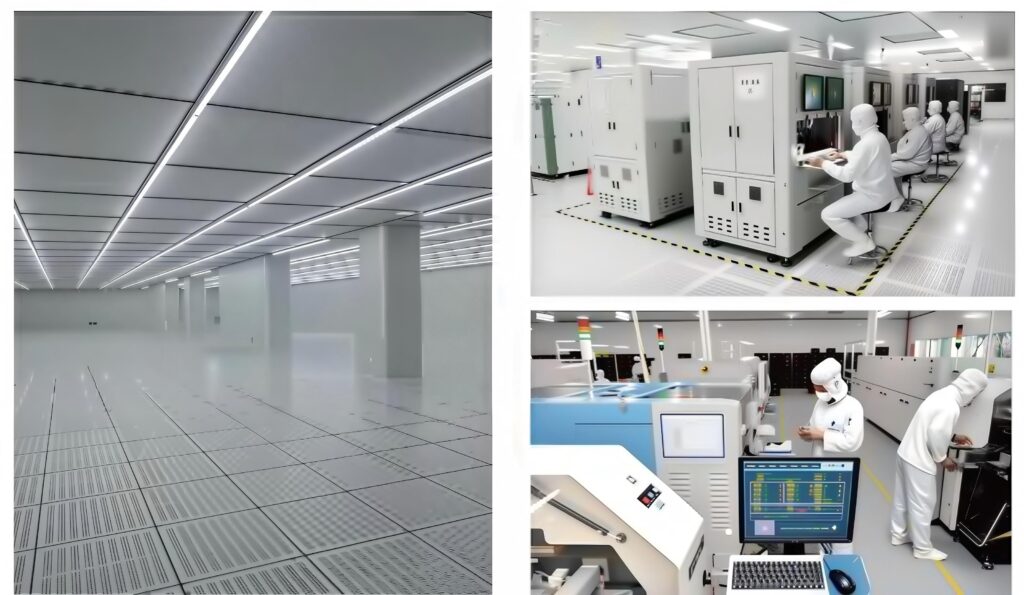
The production environment in the electronics industry typically needs to be maintained within cleanroom standards, such as ISO Class 5–8. Even tiny airborne particles (e.g., larger than 0.3 μm) can contaminate precision products such as chips and circuit boards, affecting product performance and even leading to scrapping. Therefore, filtration systems usually employ multi-stage filtration structures, including pre-filters, medium-efficiency filters, and high-efficiency filters, to achieve layer-by-layer purification.
The filter elements in this process primarily intercept suspended particles, dust, and microorganisms in the air, while also requiring low resistance, high dust holding capacity, and stable airflow distribution.
Key Advantages of Filter Elements
In electronics industry applications, high-quality filter elements typically possess the following characteristics:
High filtration efficiency: Effectively intercepts micron-sized and even submicron-sized particles.
Low operating resistance: Reduces system energy consumption and improves fan efficiency.
High dust holding capacity: Extends replacement cycles and reduces maintenance costs.
Strong structural stability: Adapts to long-term continuous operation and changes in air pressure.
High compatibility: Suitable for various HVAC systems and purification equipment.
These characteristics enable them to operate stably and continuously in complex electronics manufacturing environments.
As the electronics manufacturing industry continues to demand higher product precision and more stringent production environment requirements, the importance of air filtration systems is becoming increasingly prominent. Filter elements, as core filtration components, play an irreplaceable role in semiconductors, PCBs, and electronic assembly. Through proper configuration and selection, not only can air cleanliness be effectively improved, but system operating efficiency can also be optimized, providing a reliable guarantee for stable production.