Hotline: +8618266696519
In modern biological laboratories, air cleanliness directly impacts the accuracy of experimental results and the safety of personnel. Especially in highly sensitive environments such as microbiology research, cell culture, PCR experiments, and virus detection, stringent control requirements exist for airborne particles, aerosols, and microorganisms. Therefore, high-performance filter cartridges play a crucial role in air purification systems for biological laboratories.
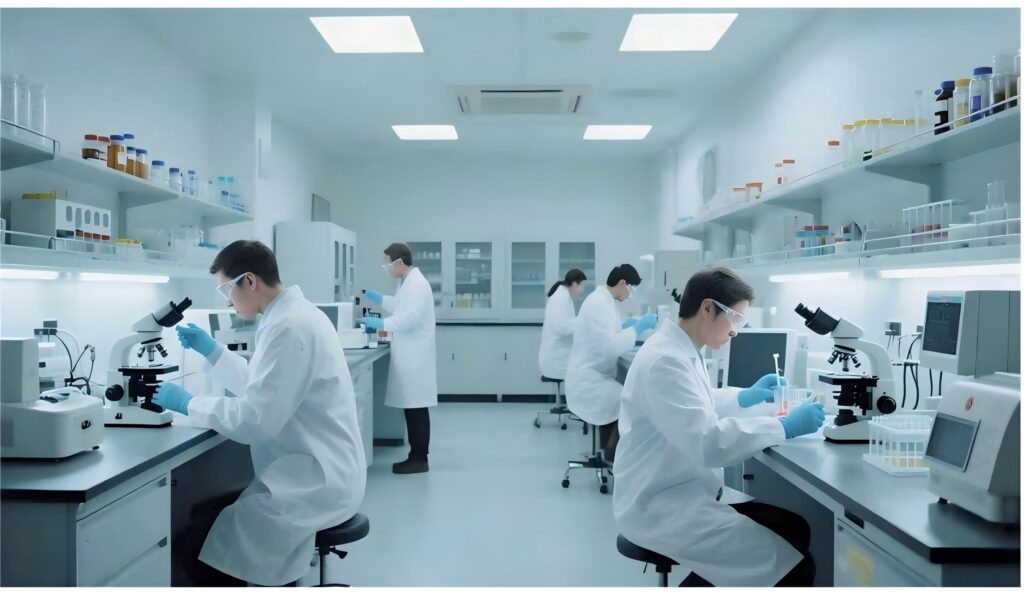
Biological laboratories typically require a stable, clean environment to prevent external contaminants from interfering with experimental samples. Air filtration systems generally employ multi-stage filtration structures, including combinations of pre-filters, medium-efficiency filters, and high-efficiency filters (HEPA/ULPA), to remove particulate matter and microorganisms from the air in a progressive manner.
The filter element, in particular, primarily functions to intercept fine particles, dust, and microbial carriers, while also requiring high filtration efficiency, low resistance, and stable airflow distribution to ensure the continuous cleanliness of the experimental environment.
With the continuous development of biotechnology and medical research, laboratories have increasingly higher requirements for air cleanliness and environmental control. As an important component of air purification systems, filter cartridges play a crucial role in microbiology, cell culture, and PCR laboratories. Through proper selection and system configuration, not only can air quality be effectively improved, but experimental safety and data accuracy can also be ensured, providing reliable environmental support for scientific research.